Multiplier Bonuses Reshape Decision Charts in Blackjack Game Variants
Alex Simmons · Sep 26, 2026
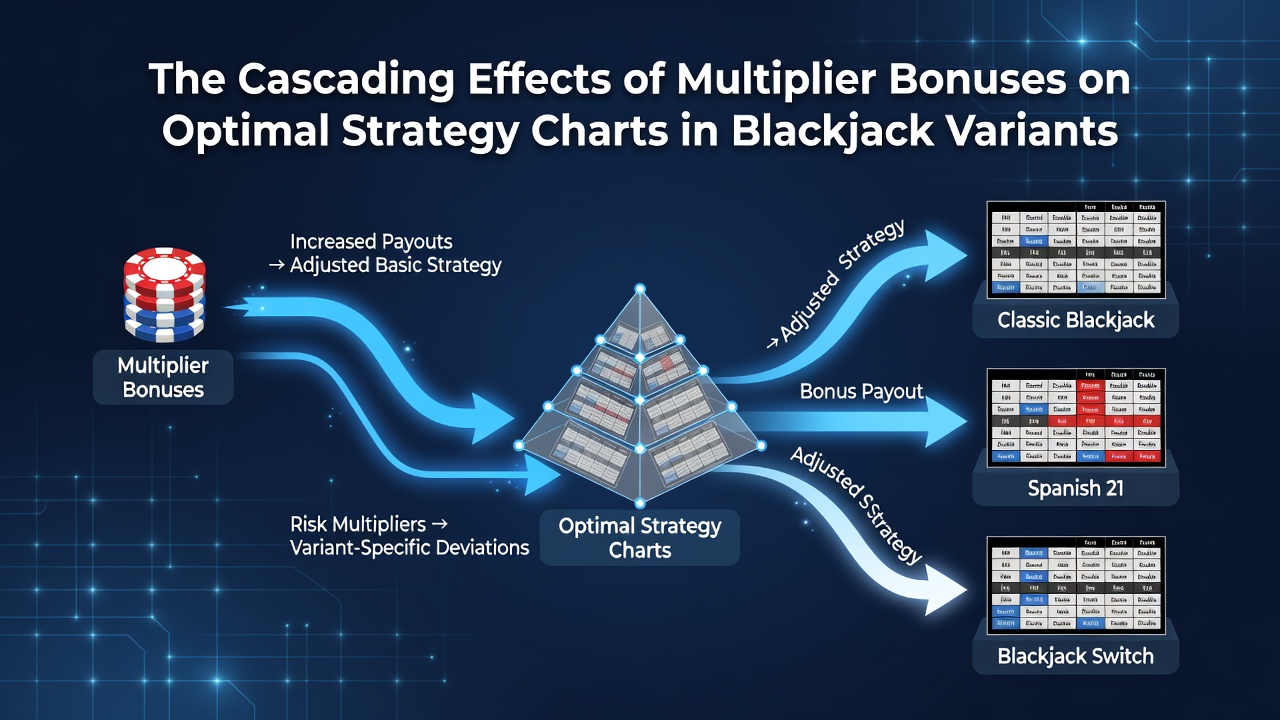
Multiplier Bonuses Reshape Decision Charts in Blackjack Game Variants
Multiplier bonuses appear in numerous blackjack variants through side bets and progressive features that scale payouts based on specific card combinations or outcomes, and these elements force recalibrations across optimal strategy charts because the expected values shift when certain hands receive enhanced returns. Researchers track how these multipliers alter the math behind hit, stand, double, and split decisions, particularly when the bonus applies only to specific ranks or suits that interact with the main game.
Core Mechanics of Multiplier Integration
Standard basic strategy derives from exhaustive calculations of every possible dealer upcard against every player total, yet multiplier bonuses introduce additional payout layers that change the break-even points for actions like doubling on soft totals or splitting pairs, and data from simulation models shows these adjustments propagate outward because one altered decision affects subsequent hands in multi-deck shoes. Observers note that a 2x multiplier on a suited blackjack, for instance, raises the value of early ace-ten combinations enough to modify insurance correlations in some rule sets.
Game designers embed these features in titles such as Blackjack Switch and Spanish 21 derivatives where the multiplier triggers on bonus hands, and the cascading effect emerges when players must weigh the main hand against the bonus opportunity within the same round. Figures from industry reports indicate that in variants with frequent multiplier triggers the optimal frequency of pair splits increases by measurable margins when the bonus covers matching ranks.
Propagation Through Strategy Adjustments
Changes begin at the decision nodes most directly tied to the bonus trigger and then ripple into adjacent chart cells because deck composition probabilities adjust after cards are removed, and studies reveal that a multiplier on pairs of aces or eights can shift the doubling threshold on related soft hands by several percentage points in expected value. Those who model these systems find that the effect compounds in games offering resplits because each additional split multiplies the chance of hitting the bonus condition.
Take the case where a 3x multiplier applies to any three-of-a-kind formed after splitting, and researchers discovered that the strategy chart for hard totals near the bust line receives updates since players now pursue splits more aggressively even when basic strategy without the bonus would dictate standing. This creates secondary adjustments in surrender decisions because the potential bonus payout offsets some of teh risk in close situations.

Variant-Specific Chart Modifications
In single-deck games the impact registers more sharply because card removal effects amplify the value of each multiplier trigger, whereas multi-deck formats dilute the cascade yet still require chart revisions at the margins according to probability models published by academic gaming centers. Australian regulatory analyses from the Queensland Office of Liquor and Gaming Regulation highlight how variant rules interact with these bonuses to produce distinct strategy matrices that differ from standard charts by up to twelve decision points per deck composition.
European variants that restrict doubling options see narrower but still measurable shifts when multipliers attach to insurance or even-money scenarios, and data indicates the optimal frequency of taking insurance rises when the side feature carries its own multiplier component. Those modeling Atlantic City rulesets report that late surrender thresholds move outward because the bonus potential on surviving hands justifies staying in marginal positions longer.
Research Findings and September 2026 Updates
Analyses conducted through the University of Nevada, Las Vegas gaming laboratories demonstrate that multiplier bonuses create non-linear effects on overall house edge calculations when players apply unmodified charts, resulting in elevated error rates at tables offering frequent bonus triggers. Nevada Gaming Control Board reports document similar patterns across licensed properties where strategy charts require quarterly revisions to maintain accuracy. In September 2026 new simulation datasets released by the Canadian Centre for Gaming Research are expected to refine these models further by incorporating real-time shuffle algorithms that interact with multiplier frequencies.
Additional evidence from the European Gaming and Betting Association shows regional differences in how multipliers affect chart evolution, particularly when rule variations such as no-hole-card formats combine with bonus structures, and these interactions produce strategy tables that diverge from American counterparts in both pair-splitting and soft-hand sections.
Conclusion
Multiplier bonuses therefore generate cascading revisions across optimal strategy charts in blackjack variants by altering expected values at multiple decision points simultaneously, and ongoing research continues to map these interactions through updated simulation outputs and regulatory data releases. Players and operators rely on these revised charts to align actions with the modified mathematical landscape created by each bonus layer.