Licensing Evolutions Across Jurisdictions Reshape Bonuses and Live Play in Online Card Games
Ellis Krüger · Oct 24, 2026
Licensing Evolutions Across Jurisdictions Reshape Bonuses and Live Play in Online Card Games
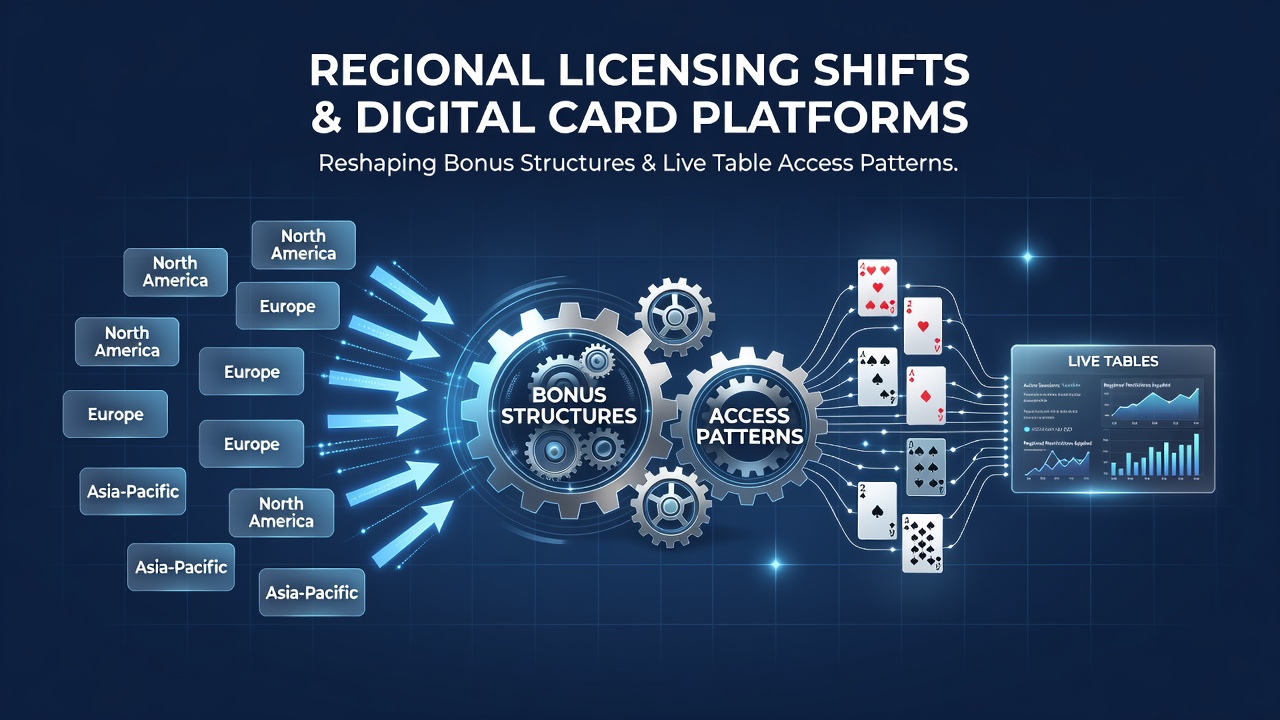
Regional licensing frameworks continue to evolve, and operators adjust bonus structures while live table availability shifts accordingly in digital card platforms. Data from multiple jurisdictions shows that regulatory updates often tie bonus caps directly to licensing compliance, which in turn influences how platforms allocate promotional funds across different markets. Observers note that these changes create distinct access patterns for live dealer tables, as operators prioritize regions where license terms permit broader table offerings.
Key Licensing Adjustments in Major Markets
Platforms operating in North America and Europe face new conditions that link bonus sizes to player verification standards and revenue reporting requirements. According to the New Jersey Division of Gaming Enforcement, several operators revised maximum bonus values in early 2026 to align with updated license provisions that emphasize responsible play metrics. Those adjustments reduced introductory offers in certain states while expanding them in others where regulators allowed higher wagering thresholds. Research from academic sources on gaming policy indicates that such variations stem from differing interpretations of player protection clauses embedded in license renewals.
Canadian provinces provide another clear example. Ontario's Alcohol and Gaming Commission implemented rules in 2025 that require platforms to disclose bonus terms within license applications, leading some providers to standardize bonus percentages across the province. This standardization altered access to live tables because operators consolidated dealer resources into fewer jurisdictions to maintain compliance efficiency. Figures reveal that live dealer session availability dropped by measurable percentages in provinces with stricter reporting mandates while rising in areas with streamlined approval processes.
Impact on Bonus Structures
Bonus frameworks respond directly to licensing language around player acquisition and retention. When regulators impose stricter caps on deposit matches or free play credits, platforms redistribute promotional budgets toward loyalty programs instead. Industry reports highlight how operators in Australian markets, guided by the Australian Communications and Media Authority, shifted from large welcome bonuses to smaller recurring rewards to satisfy license conditions focused on long-term play monitoring. Those who studied these transitions found that the changes produced more predictable revenue flows for platforms adn altered user engagement timelines.
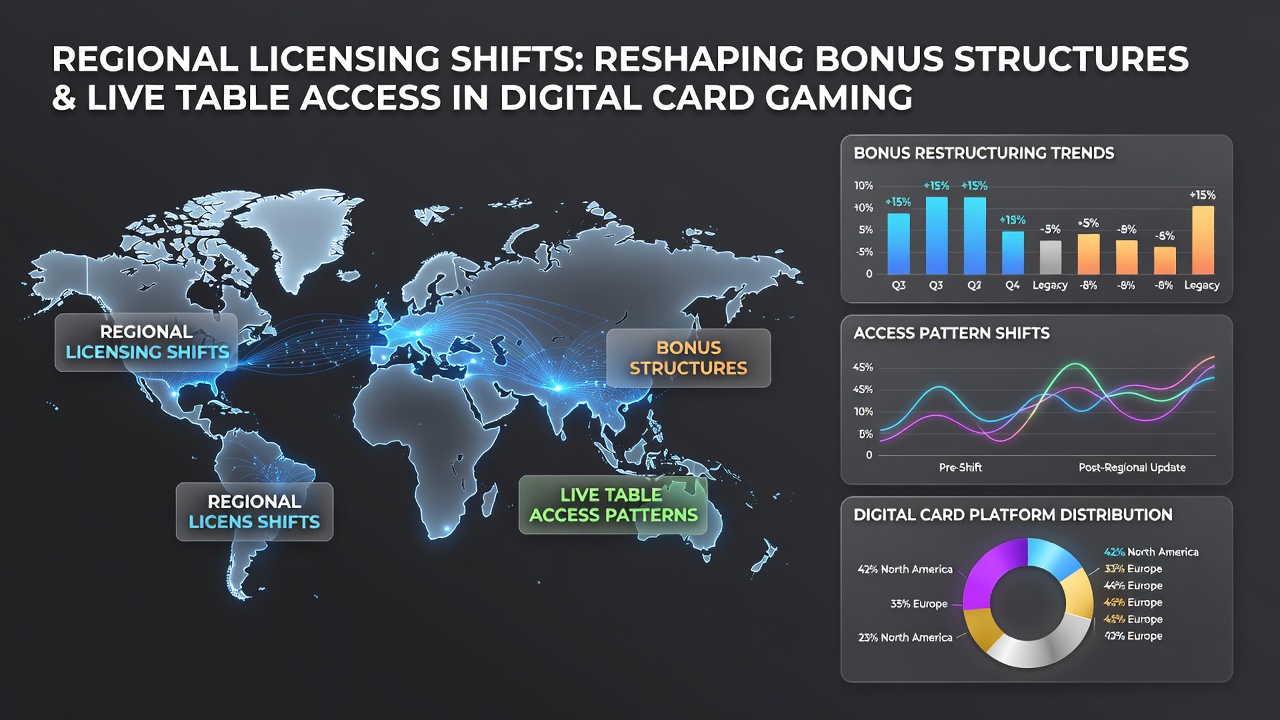
Live table access patterns follow similar regulatory logic. Licenses often specify the number of concurrent dealer streams permitted, which forces platforms to rotate table availability based on regional demand forecasts. In October 2026, several operators plan to synchronize live dealer schedules with updated European license renewals that tie table counts to real-time compliance audits. This synchronization creates staggered access windows where players in one region gain extended hours while others experience reduced availability during peak times.
Live Table Access Reconfigurations
Digital platforms reconfigure live table inventories when license terms change the technical requirements for streaming and identity verification. One study revealed that operators consolidated dealer talent pools into hubs located in jurisdictions with favorable licensing terms, which then dictated which regions received priority access during high-traffic periods. Data shows corresponding increases in wait times for live tables in markets with tighter licensing oversight, whereas regions with more flexible rules see expanded table selections and shorter queues.
Platform analytics further demonstrate that these access shifts correlate with bonus modifications. When live tables become limited in a given region, operators often compensate by enhancing bonus offers tied to RNG games instead. Researchers discovered that this compensatory approach maintains overall player activity levels even as live dealer participation fluctuates according to license-driven availability.
Broader Industry Patterns
Trade associations tracking digital gaming report that licensing shifts produce ripple effects across bonus and table ecosystems simultaneously. Platforms monitor regulatory announcements from multiple bodies, including provincial commissions and national authorities, to forecast where bonus restrictions or live table expansions will occur next. Evidence suggests that operators who align bonus structures early with upcoming license conditions gain competitive positioning in those markets.
October 2026 marks several scheduled license review cycles that observers expect will accelerate these trends. Platforms anticipate further refinements to bonus disclosure rules and live dealer capacity limits as regulators incorporate new data on player behavior patterns collected under current licenses.
Conclusion
Regional licensing developments continue to drive measurable changes in both bonus structures and live table access across digital card platforms. Operators respond by adjusting promotional terms and table allocations to match jurisdiction-specific requirements, while data from regulatory bodies and research institutions documents the resulting patterns. These adjustments reflect ongoing efforts to balance compliance obligations with operational efficiency in an evolving regulatory landscape.